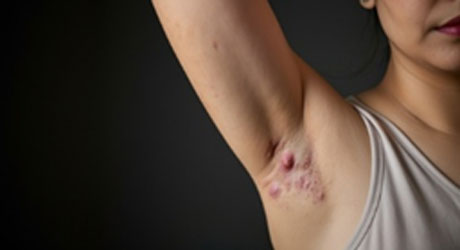
Hidradenitis suppurativa (HS), also known as acne inversa, is a chronic inflammatory skin disease that begins with blockage of the hair follicle, leading to inflammation and rupture. Over time, it can cause subcutaneous fibrotic tunnels and significant tissue damage beneath the skin. HS typically develops between puberty and age 30 and is more common in females. People with HS often develop painful, deep nodules in hair-bearing areas, most commonly the underarms, groin, and buttocks.
HS can progress to adjacent inflammatory lesions coalescing into tunnels with abundant abscess formation and exudative secretions that may cause extensive scarring and skin loss due to surgical resection of these lesions.
Since HS originates within the hair follicle, hair removal has been studied. A recent publication[1] reviewed the available literature; 10 studies evaluating 227 patients treated with Nd:YAG, Intense Pulsed Light (IPL) and fractional CO2 were included.
Laser Hair Removal for Acne Inversa:
The authors concluded that Laser Hair removal is effective in reducing HS severity regardless of the laser modality used; however, the most compelling evidentiary support was for long pulsed Nd:YAG. This is probably due to its safety and effectiveness in the skin of color population. The authors also note that insurance coverage for this condition is limited. The high cost for the conventional medications used for HS ($16,000-18,000/year) versus the average cost of hair removal sessions ($582/session – within their area, Yale University in New Haven, Conn) makes hair removal a cost-effective preventive measure as an viable option within the scope of clinical treatment methods for HS.
[1] Shipman, WD et.al., Efficacy of laser hair removal in hidradenitis suppurativa: A systematic review and meta-analysis, Lasers in Surgery and Medicine, 2024