What is the Difference Between a Picosecond Laser and a Q-Switch in Tattoo Removal?
The fundamental difference is the pulse duration – the picosecond has a much shorter pulse duration, enabling the delivery of high levels of energy in a very short time- one trillionth of a second. The main tissue effect is a micro explosion of the pigment, which renders the pigment particles small enough to be promptly cleared. This makes laser tattoo removal more efficient, thus requiring less treatment sessions.
Another advantage of the Pico laser is that it does not generate heat during the tattoo removal process, as the Q-Switch laser does. The Q-Switched laser works in a photothermal way, the picosecond laser disrupts pigment using a photoacoustic effect. This makes the picosecond laser safer and less likely to induce post inflammatory hyperpigmentation or paradoxical darkening.
Finally, picosecond lasers break pigment more efficiently and render smaller pigment particles which are easier to eliminate. Picosecond lasers lead to faster tattoo clearance, less heat-induced injury and complications, and are more efficient in removing resistant ink.
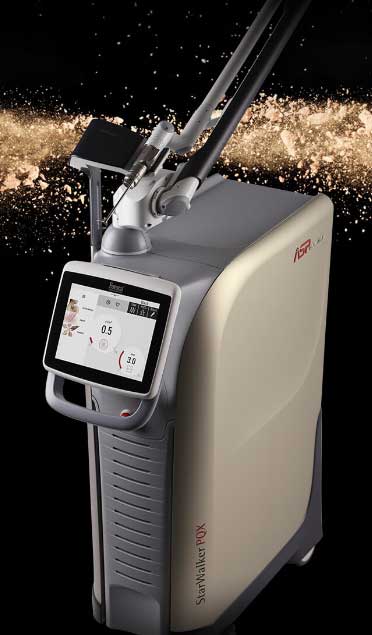
The Fotona Starwalker PQX is currently the laser of choice for efficient and safer tattoo removal.